• 06359630013

  • info@steelsupport24.com

  • Gujarat-364001, India.

Logo
  • Home
  • About Us
  • Services
    • Process Optimization
    • Casting Defect Analysis
    • Mould & Gating Design
    • Material & Alloy Selection
    • Quality System Setup
    • Foundry Plant Layout
    • Ultrasonic Testing
    • Radiographic Inspection
    • Surface & Structural Inspection
    • Magnetic Particle Testing
    • Dye Penetrant Testing (DPT)
    • Mechanical & Metallurgical Testing
  • Blog
  • Contact

Need help?

+91 6359630013

Logo
  • Home
  • About Us
  • Services
    • Process Optimization
    • Casting Defect Analysis
    • Mould & Gating Design
    • Material & Alloy Selection
    • Quality System Setup
    • Foundry Plant Layout
    • Ultrasonic Testing
    • Radiographic Inspection
    • Surface & Structural Inspection
    • Magnetic Particle Testing
    • Dye Penetrant Testing (DPT)
    • Mechanical & Metallurgical Testing
  • Blog
  • Contact

Casting Defect Analysis

  • Home
  • Services
  • Casting Defect Analysis

Service lists

  • Process Optimization
  • Casting Defect Analysis
  • Mould & Gating Design
  • Material & Alloy Selection
  • Quality System Setup
  • Foundry Plant Layout
  • Ultrasonic Testing
  • Radiographic Inspection
  • Surface & Structural Inspection
  • Magnetic Particle Testing
  • Dye Penetrant Testing (DPT)
  • Mechanical & Metallurgical Testing

Service lists

  • Process Optimization
  • Casting Defect Analysis
  • Mould & Gating Design
  • Material & Alloy Selection
  • Quality System Setup
  • Foundry Plant Layout
  • Ultrasonic Testing
  • Radiographic Inspection
  • Surface & Structural Inspection
  • Magnetic Particle Testing
  • Dye Penetrant Testing (DPT)
  • Mechanical & Metallurgical Testing
sidebar-img

Need help?

+91 6359630013

Casting Defect Analysis

Eliminating defects for consistent quality

Casting defects cause major production losses. Our systematic approach identifies root causes and implements corrective actions.

We combine metallurgical expertise with practical foundry experience to deliver permanent solutions.

Key Capabilities

  • Visual and metallurgical inspection
  • 5-Why and Fishbone analysis
  • Process parameter study
  • Simulation validation
  • Corrective action planning
  • Rejection rate reduction
service-img
service-img

Our Approach to Casting Defect Analysis

Casting defects — porosity, shrinkage, cold shuts, misruns, sand inclusions, hot tears — are among the costliest problems in any foundry. Each rejected casting represents wasted metal, energy, labour, and delivery time. Identifying the true root cause, rather than addressing surface symptoms, is the only path to lasting quality improvement.

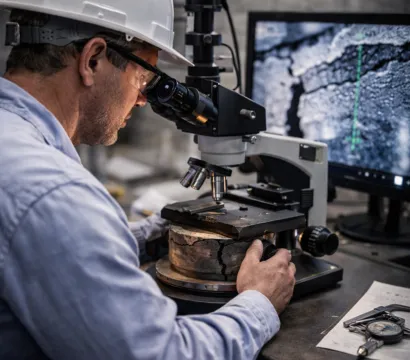
Steel Support 24 uses a structured 7-step defect investigation methodology. We begin with detailed defect classification using visual inspection and macro-photography, followed by metallurgical sectioning and microscopic examination where required. We then correlate defect patterns with process parameter records — pouring temperature logs, sand test data, mould hardness readings, and metal chemistry reports.

Root cause tools applied include 5-Why analysis, Ishikawa (Fishbone) diagrams, and FMEA (Failure Mode and Effects Analysis). For complex cases such as subsurface shrinkage or gas porosity, we use casting simulation software (MAGMA / AutoCAST) to validate hypotheses before implementing changes.

Corrective actions are documented as updated SOPs and incorporated into the quality control plan. We track defect trends weekly post-implementation and provide a formal closure report when rejection rates meet target thresholds.

This service is applicable to grey iron, SG iron, steel, and aluminium alloy foundries, as well as investment casting and die casting operations seeking to resolve chronic rejection issues.

Frequently Asked Questions

  • Many defect cases can be initially assessed remotely using photographs, rejection data, and process records. However, for recurring or complex defects, an on-site visit is strongly recommended to observe live production conditions and collect fresh samples for metallurgical examination.

  • We use a combination of defect location mapping, cross-sectional cutting, and microstructural examination. Moulding defects typically show characteristic surface textures or inclusions, while metallurgical defects such as shrinkage or gas porosity display distinct internal morphology visible under a microscope.

  • In our experience, 85–90% of chronic defect cases are resolved within 4–8 weeks of implementing corrective actions, provided the foundry can maintain process discipline. The remaining cases require longer monitoring periods due to variability in incoming raw materials or sand system instability.

logo

Delivering expert foundry consulting solutions that enhance efficiency, quality, and sustainable growth across global industrial markets.

OUR SERVICES

  • Process Optimization
  • Casting Defect Analysis
  • Mould & Gating Design
  • Material & Alloy Selection
  • Quality System Setup
  • Foundry Plant Layout

POPULAR POST

  • Ductile Iron Castings: Strength, Durability & Industrial Uses
    Ductile Iron Castings: Strength, Durabil...

    February 15, 2026

  • Industrial Casting Process: The Ultimate Guide to Modern Metal Casting in Industrial Foundries
    Industrial Casting Process: The Ultimate...

    February 15, 2026

NEWSLETTER

Get the latest insights on foundry consulting and industrial growth. Subscribe for updates.

© SteelSupport24 2026 | All Rights Reserved

  • Terms & Conditions
  • Privacy Policy
  • Contact Us