
Need help?
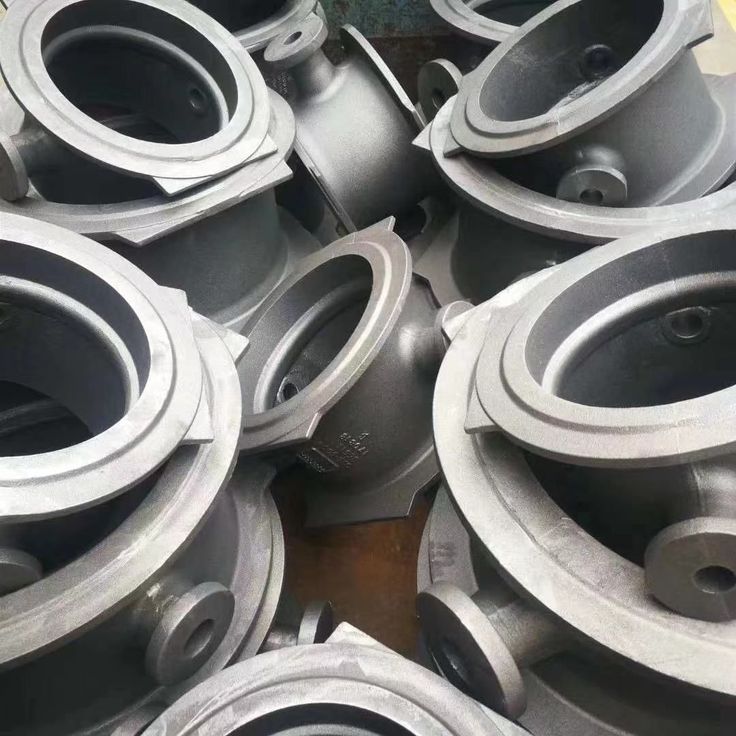
Ductile iron castings play a critical role in modern heavy manufacturing, offering a unique combination of strength, ductility, wear resistance, and cost efficiency. Also known as nodular cast iron or spheroidal graphite iron, ductile iron has transformed the metal casting industry by bridging the performance gap between traditional gray iron and cast steel. For manufacturing engineers, plant managers, and procurement heads, ductile iron castings represent a highly versatile solution for demanding industrial applications.
In today’s competitive industrial foundry environment, the production of high-quality ductile iron castings requires precise control of metallurgy, process parameters, and quality control systems. This comprehensive technical guide explores the material science behind ductile iron, the casting process involved in its production, industrial applications, quality standards, sustainability aspects, and future trends shaping this essential metal casting segment.
Understanding Ductile Iron: Metallurgical Foundations
Ductile iron is distinguished by the spherical (nodular) shape of graphite particles within its microstructure. Unlike gray iron, where graphite appears as flakes that act as stress concentrators, ductile iron castings contain graphite nodules that significantly improve tensile strength and impact resistance.
The nodular structure is achieved by adding magnesium or cerium to molten iron during treatment. This modification process alters graphite formation during solidification.
Key Characteristics of Ductile Iron Castings
• High tensile strength • Excellent elongation properties • Good fatigue resistance • Superior impact strength • High wear resistance • Good machinability • Cost-effective compared to cast steel
Typical Chemical Composition
Carbon: 3.2–3.8% Silicon: 2.2–2.8% Manganese: 0.1–0.5% Magnesium: 0.03–0.05% (residual)
Precise chemical control is essential in an industrial foundry to maintain consistent mechanical properties.
Microstructure of Ductile Iron
The mechanical properties of ductile iron castings depend on the matrix structure surrounding graphite nodules:
Ferritic Matrix • High ductility • Lower strength • Excellent impact resistance
Pearlitic Matrix • Higher strength • Improved wear resistance • Lower elongation
Ferritic-Pearlitic Matrix • Balanced properties
[Insert Image: Microstructure of ductile iron showing spherical graphite nodules]
The casting process must be carefully controlled to achieve the desired microstructure.
Production Process of Ductile Iron Castings
Melting and Base Iron Preparation
The process begins with melting pig iron and scrap in induction furnaces. Strict control over:
• Carbon equivalent • Sulfur levels • Temperature
is critical before magnesium treatment.
Magnesium Treatment (Nodularization)
This is the most critical step in producing ductile iron castings.
Common treatment methods:
• Sandwich method • Tundish cover method • In-mold treatment
Magnesium reacts with sulfur and oxygen, promoting spherical graphite formation.
Challenges during nodularization:
• Magnesium fade • Reaction control • Fume generation
Process optimization ensures stable nodularity and prevents casting defects.
Inoculation
After magnesium treatment, inoculants (typically ferrosilicon-based alloys) are added to:
• Improve graphite distribution • Reduce carbide formation • Enhance mechanical consistency
Inoculation timing significantly impacts casting quality.
Molding and Pouring
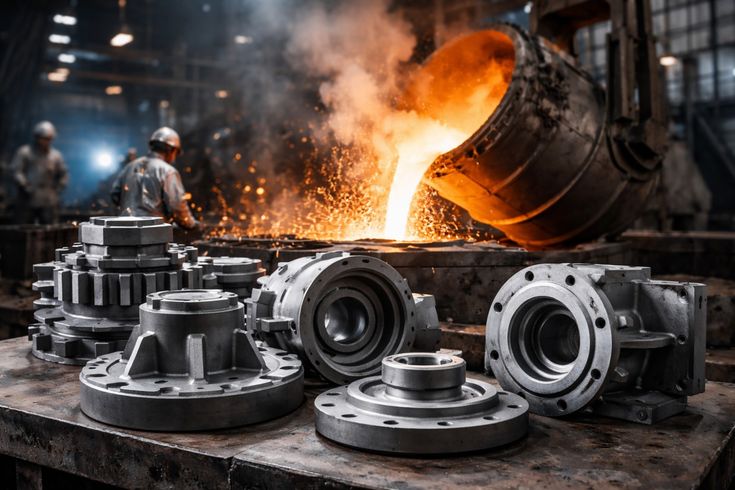
Ductile iron castings are commonly produced using sand casting techniques in an industrial foundry.
Critical process controls include:
• Pouring temperature (typically 1350–1450°C) • Gating system design • Mold strength • Solidification rate
Improper control can cause defects such as:
• Chunky graphite • Shrinkage porosity • Carbide formation
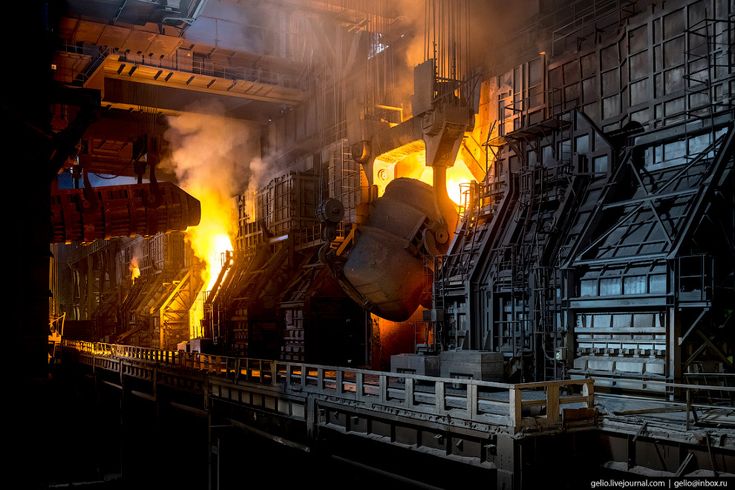
[Insert Image: Automated pouring of ductile iron into sand mold]
Solidification and Cooling
Controlled cooling ensures the desired matrix structure. Cooling rate influences:
• Ferrite formation • Pearlite percentage • Nodule count
Chills may be used to control localized solidification.
Mechanical Properties of Ductile Iron Castings
Depending on grade, ductile iron castings can achieve:
Tensile strength: 400–900 MPa Yield strength: 250–600 MPa Elongation: 2–18%
Common international standards:
• ASTM A536 • EN 1563 • ISO 1083
Example Grades
EN-GJS-400-15 Tensile strength: 400 MPa Elongation: 15%
EN-GJS-700-2 Tensile strength: 700 MPa Elongation: 2%
Heat Treatment of Ductile Iron Castings
Heat treatment enhances mechanical properties.
Annealing
• Produces ferritic structure • Improves ductility
Normalizing
• Refines pearlite • Increases strength
Austempering (ADI – Austempered Ductile Iron)
ADI offers:
• Very high strength • Exceptional wear resistance • Improved fatigue properties
Applications include gears, crankshafts, and heavy-duty components.
[Insert Image: Heat treatment furnace for ductile iron castings in industrial foundry]
Quality Control in Ductile Iron Production
In a modern industrial foundry, quality control is integrated throughout the casting process.
Chemical Analysis
Spectrometers verify:
• Carbon equivalent • Magnesium residual • Alloy composition
Microstructure Evaluation
Metallographic analysis ensures:
• Nodule count per mm² • Nodularity percentage • Matrix composition
Mechanical Testing
• Tensile testing • Hardness testing • Impact testing
Non-Destructive Testing
• Ultrasonic inspection • Magnetic particle testing • Radiographic testing
Common Defects in Ductile Iron Castings and Solutions
Shrinkage Porosity
Cause: • Inadequate riser design
Solution: • Use simulation software • Optimize feeding systems
Carbide Formation
Cause: • Insufficient inoculation • Rapid cooling
Solution: • Improve inoculation practice • Adjust cooling rate
Magnesium Fade
Cause: • Delay between treatment and pouring
Solution: • Minimize holding time • Use improved treatment techniques
Industrial Applications of Ductile Iron Castings
Automotive Industry
Ductile iron castings are widely used for:
• Crankshafts • Steering knuckles • Suspension arms • Differential housings
Their combination of strength and cost efficiency makes them ideal for mass production.
Construction and Infrastructure
Applications include:
• Manhole covers • Pipe fittings • Valve bodies • Structural connectors
Heavy Equipment and Mining
• Crusher components • Gear housings • Hydraulic parts
Energy Sector
• Wind turbine hubs • Pump casings • Pressure-retaining components
Comparison: Ductile Iron vs Cast Steel
Cost
Ductile iron castings are generally more economical due to:
• Lower melting temperature • Better castability • Reduced machining cost
Machinability
Ductile iron offers superior machinability compared to cast steel.
Strength-to-Weight Ratio
In many applications, ductile iron provides comparable performance at reduced cost.
Sustainability in Ductile Iron Castings
Energy Efficiency
Lower melting temperature compared to steel reduces energy consumption.
Recyclability
Scrap ductile iron can be fully recycled within the metal casting cycle.
Sand Reclamation
Industrial foundries reclaim large percentages of sand used in molds, minimizing waste.
Emission Control
Modern facilities integrate dust collectors and fume extraction systems to maintain environmental compliance.
Sample Technical Calculation: Carbon Equivalent
Carbon equivalent (CE) is critical for controlling solidification.
CE = %C + (%Si + %P) / 3
Example:
C = 3.6% Si = 2.5% P = 0.05%
CE = 3.6 + (2.5 + 0.05) / 3 CE = 3.6 + 2.55 / 3 CE = 3.6 + 0.85 CE = 4.45
Maintaining CE within target range ensures proper graphite formation and minimizes shrinkage defects.
Future Trends in Ductile Iron Castings
Lightweight Engineering
Design optimization reduces material usage without compromising strength.
Advanced Simulation
Computer modeling predicts:
• Solidification behavior • Stress distribution • Defect formation
Automation Integration
Robotic pouring and automated molding lines enhance repeatability in the casting process.
High-Performance Grades
Research continues into:
• Austempered ductile iron (ADI) • Alloyed ductile iron • Enhanced fatigue-resistant grades
Why Industrial Buyers Prefer Ductile Iron Castings
Manufacturing engineers and procurement heads favor ductile iron castings due to:
• Reliable mechanical properties • Cost-effective large-scale production • Design flexibility • Availability across global industrial foundries • Compliance with international standards
For applications requiring strength, impact resistance, and wear durability, ductile iron offers an optimal balance of performance and economy.
Conclusion
Ductile iron castings have revolutionized the metal casting industry by combining strength, ductility, and affordability. In a technologically advanced industrial foundry, precise metallurgical control, automation, and rigorous quality control ensure consistent production of high-performance components.
As industries demand stronger, lighter, and more cost-efficient materials, ductile iron castings will continue to play a vital role in automotive, infrastructure, energy, and heavy equipment sectors. Through continuous innovation, sustainability initiatives, and process optimization, modern industrial foundries are elevating ductile iron to meet the evolving requirements of global manufacturing.
For companies seeking reliable metal casting partners, expertise in ductile iron production is a clear indicator of technical capability, operational discipline, and long-term manufacturing excellence.
Loading...
Loading comments...
Add a Comment
Join the Conversation
Share your thoughts on this article. Your email address will not be published. Authentication is handled securely via Google.